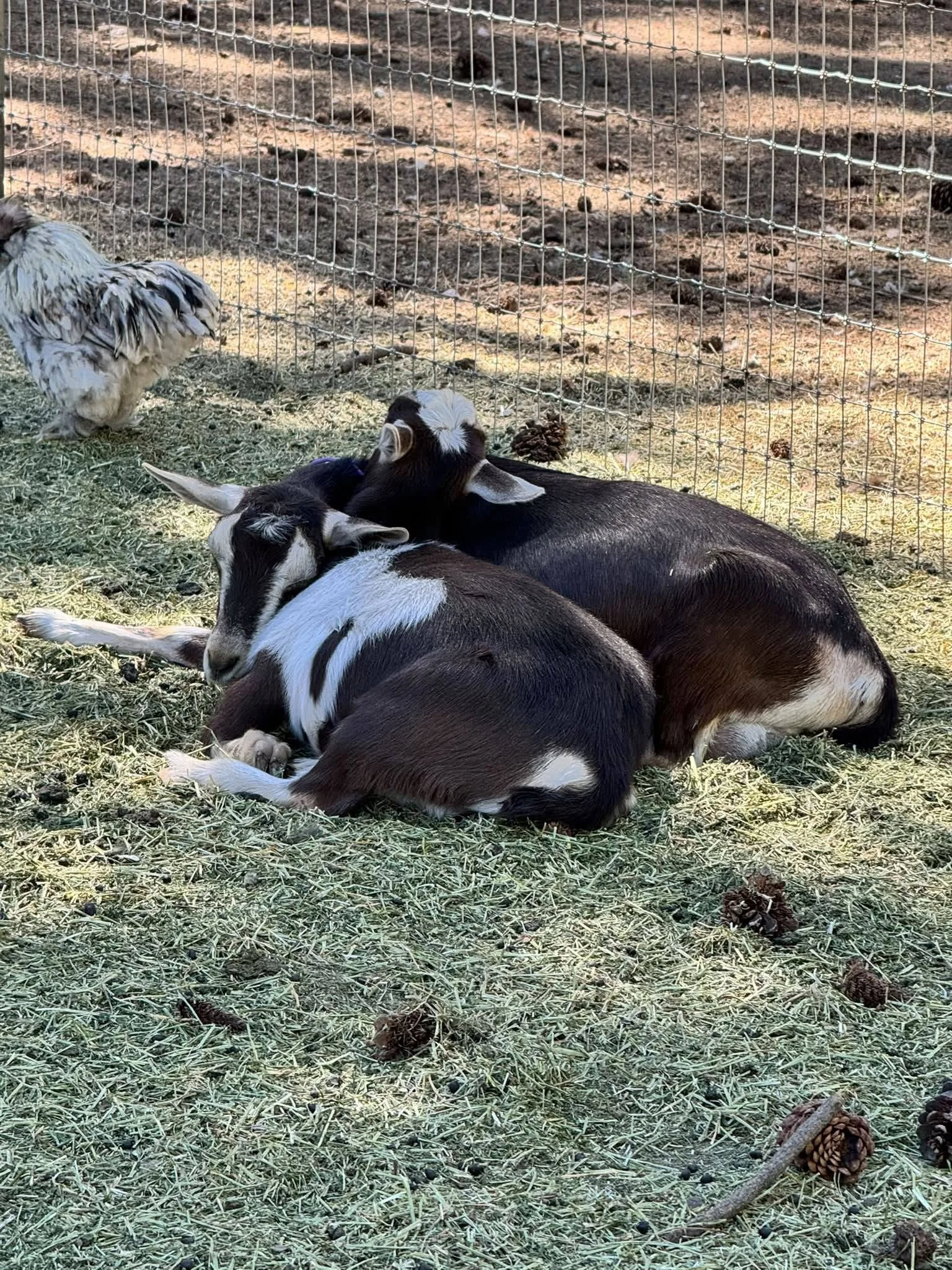
Nyala’s Kidding Story
Nyala & Birdie — April 3
Our 2026 kidding season at Bootsy Garden started on April 3 with Nyala, who had been AI bred to Better Wayz Champ Carabear.
I came home from work that afternoon around 4:00 p.m. and Nyala was still outside with the rest of the herd. There wasn’t anything dramatic happening, but something about her told me she was in pre-labor. At this point, I’ve learned there are times when you can’t necessarily point to one specific sign—you just know your doe well enough to know something is different.
So I brought her in and put her in a kidding pen. Nyala laid down, tucked herself back onto her legs, and waited. About 45 minutes later, she started actively pushing. At around 4:30 p.m., Birdie was born. Her delivery was absolutely textbook. Birdie came out beautifully, and everything initially looked exactly the way you hope a kidding will go.
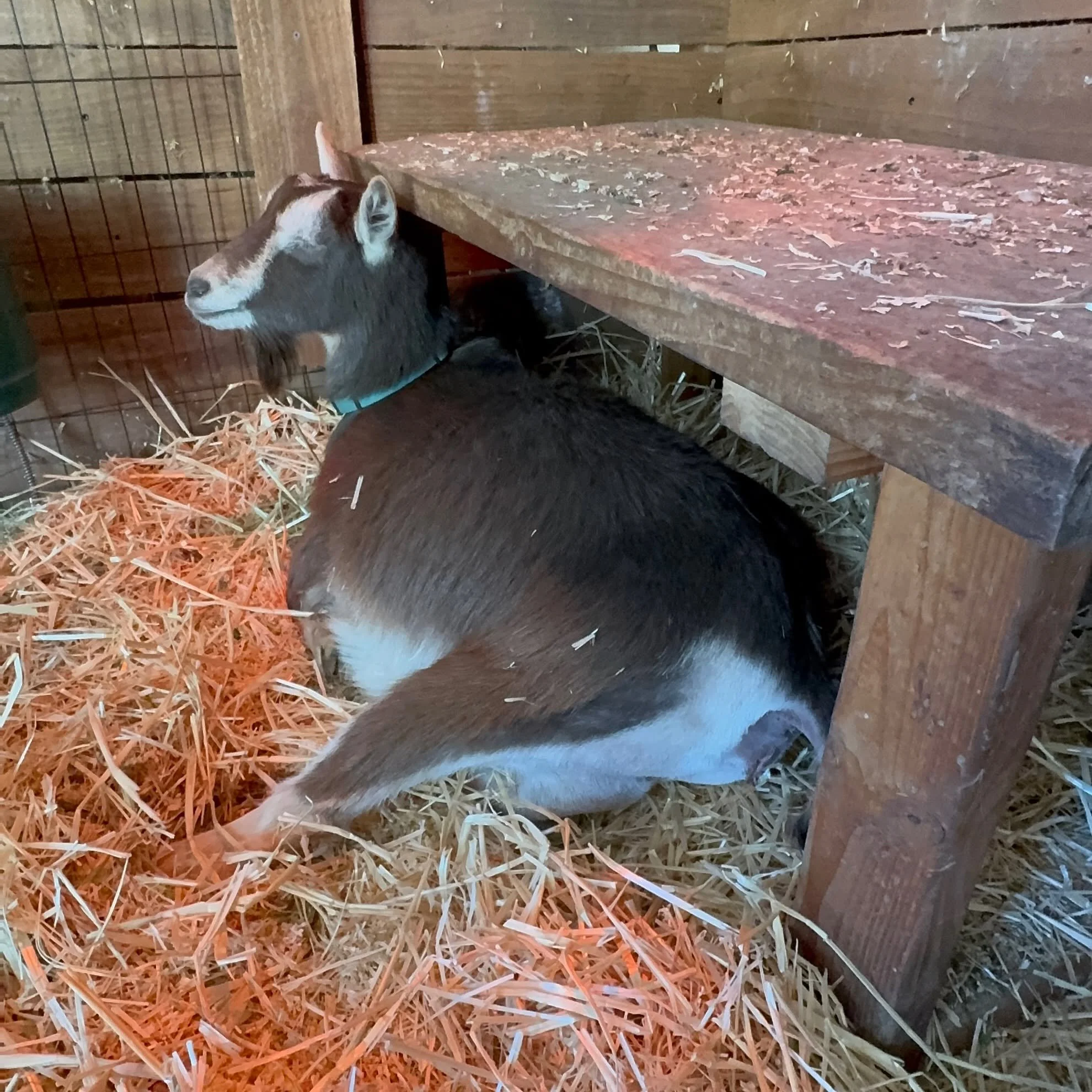
My roommate was there with me, so he took Birdie to get her cleaned up and blow-dried while I stayed with Nyala. I milked Nyala immediately after the birth and put her fresh colostrum straight into a bottle so Birdie could have her first feeding.
And then I waited. I had ultrasounded Nyala earlier in her pregnancy—probably earlier than I should have—and I thought I had seen two kids. So in my mind, Birdie wasn’t necessarily the end of the delivery. I waited for another kid. Nothing. I waited some more. Still nothing.
By about the 45-minute mark, I was starting to spiral. It was getting late, around 5:15 or 5:30, and I started calling veterinarians. Of course, nobody was open. Eventually, I called my neighbor, who farms and has experience with cattle.
Her advice was simple: you have to go in and check.
That was the first time I had ever gone all the way into a doe to check for another kid.
I put on an OB glove with another glove over it and used an enormous amount of lubricant—the lubricant I keep on hand contains chlorhexidine. And then I went incredibly slowly.
The entire time, I kept thinking about an analogy I had once heard on a podcast about how slowly and carefully you should enter a uterus. The point of the analogy had stuck with me: this tissue can be injured or torn, so there is absolutely no reason to rush.
Nyala’s body felt like it was pushing me back out, but I kept moving carefully until I had checked all the way in.
There was no baby.
I slowly withdrew my arm, and about 15 minutes later, Nyala passed her placenta.
That was it.
Birdie was a singleton.
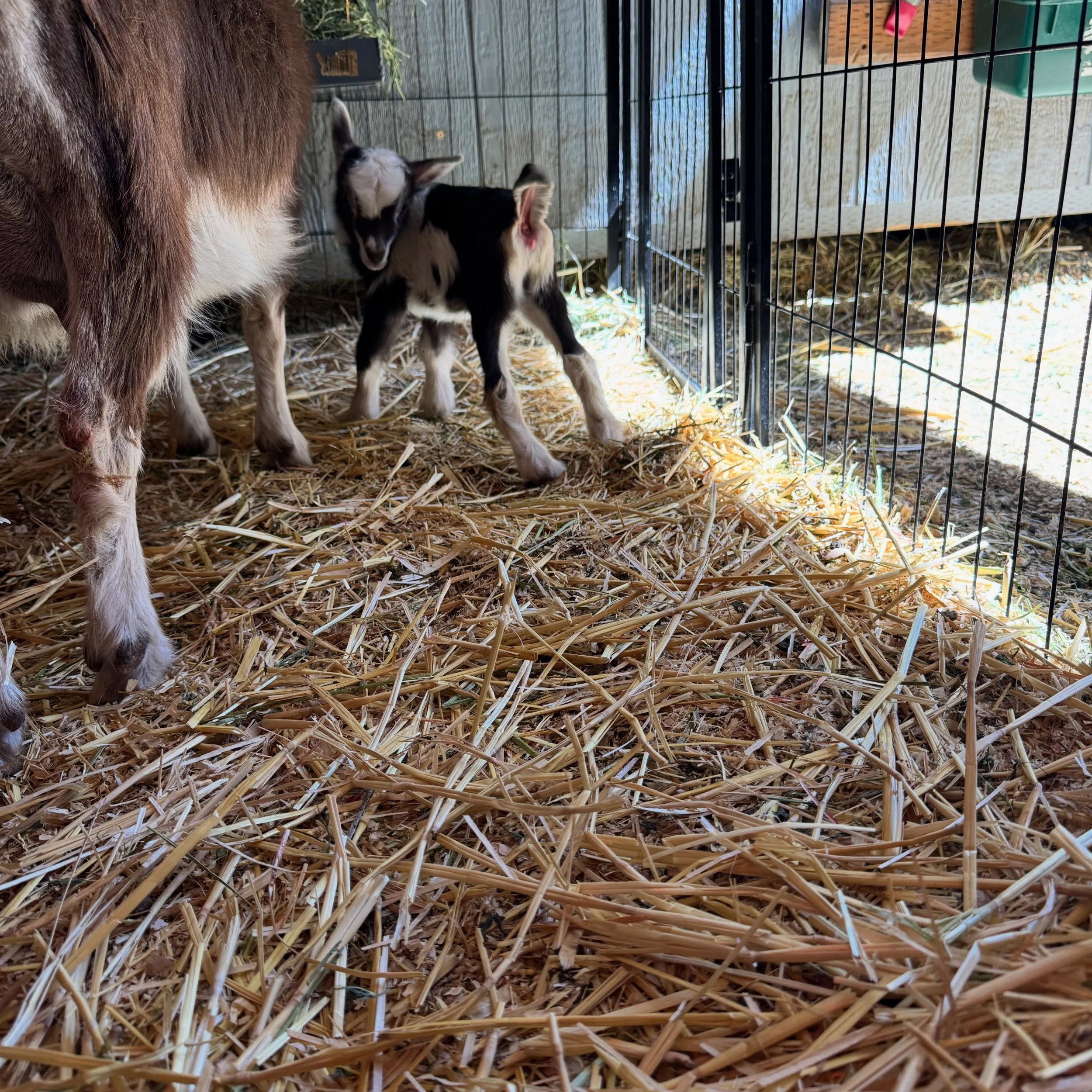
There was actually something interesting about Birdie’s birth that I didn’t fully appreciate until afterward. When she came out, some of the little structures from the placenta appeared to be coming along with her. I wondered afterward whether what I had seen could have been a clue that she was the only kid. I don’t know that for a fact, and I wouldn’t claim that it reliably means a doe is carrying a singleton, but it was something I noticed and filed away in my brain as one more thing to pay attention to in future kiddings.
And now I had a completely different problem.
What do you do with one bottle baby when your next kids aren’t due for another two months?
I didn’t want Birdie growing up alone. So we decided the best thing for her would be to put her back with Nyala and let her be dam-raised.
There was just one problem.
We had already cleaned her.
Birdie had been taken away immediately after birth, dried, blow-dried, handled and bottle-fed. When we brought this clean, fluffy little baby back to Nyala, Nyala wanted absolutely nothing to do with her. She headbutted Birdie away. And we panicked.
Then I remembered something we had seen, of all places, on Clarkson’s Farm: using the birth fluids and placenta to help a mother recognize a newborn by scent.
We still had Nyala’s placenta.
So we took our freshly cleaned, freshly blow-dried little Birdie and covered her back up in Nyala’s placenta and birth fluids.
It worked.
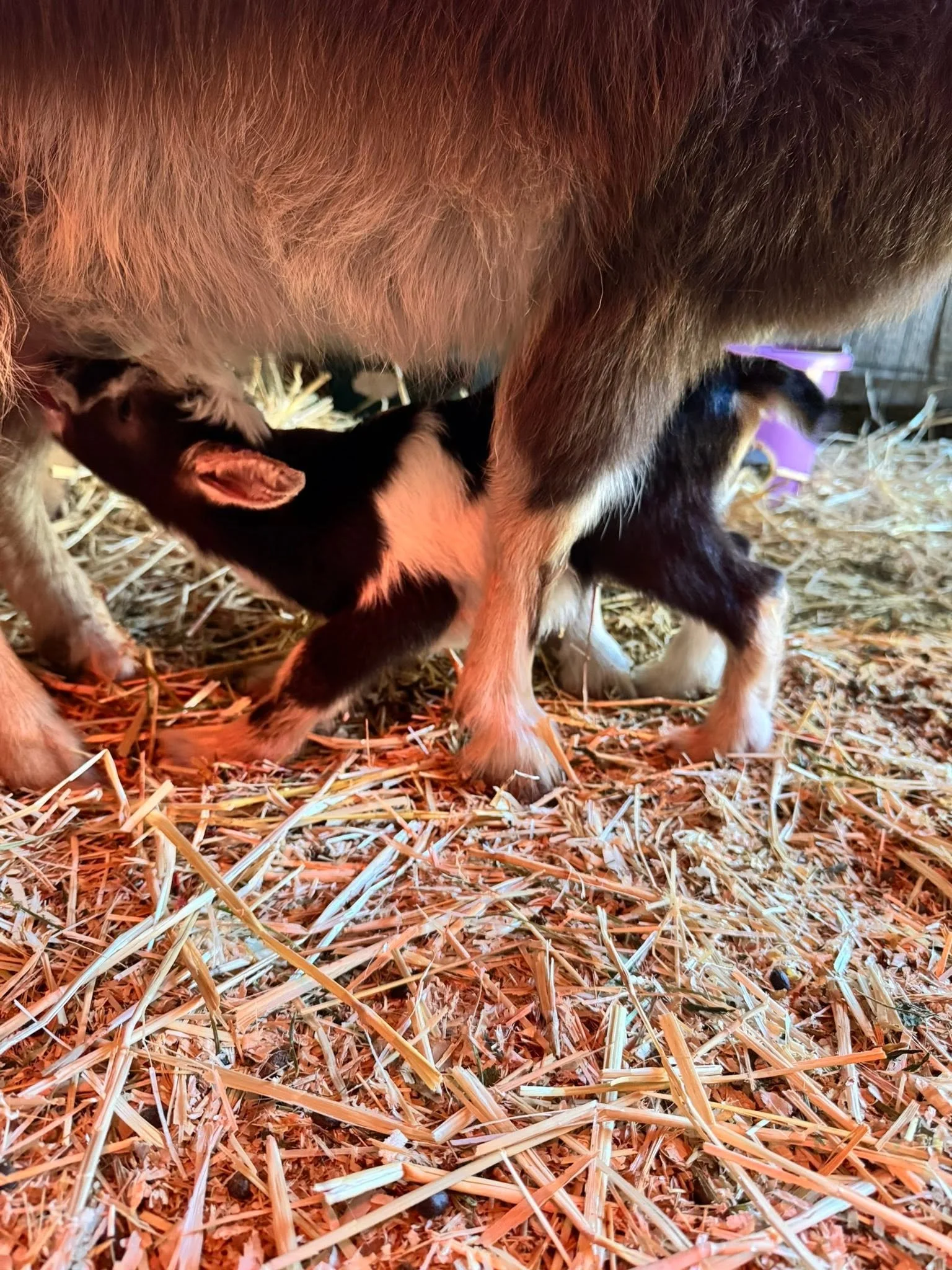
We put Birdie back in the pen, and the change in Nyala was immediate. Instead of pushing her away, Nyala recognized her. She began licking Birdie clean and suddenly seemed completely happy to have her baby.
After all that work getting Birdie clean, we had essentially made her filthy again—and that turned out to be exactly what she needed.
Nyala raised her from there.
Today, Birdie is enormous. She stayed here at Bootsy Garden, and she’ll be bred for April kids. It is a little surreal to think that the tiny singleton I was panicking over that afternoon is already approaching her own first freshening.
Nyala’s kidding also gave me something I couldn’t have learned from a book or podcast. I now know what it actually feels like to carefully check a doe after delivery and find an empty uterus. That’s not exactly an experience I was eager to add to my résumé as a goat breeder, but I’m glad I have it.
And Birdie taught me something else: sometimes the messy, primitive parts of kidding—the fluids, the smells, the placenta we are so quick to clean away—are doing something important.
We started our 2026 kidding season with one AI-bred singleton, one very nervous breeder with her arm inside a goat, one placenta-covered baby, and one mother-daughter reunion that somehow worked.
And that was Birdie’s birth.