Kidding Season 2026 at Bootsy Garden: Quads, Triplets, a Breech Birth, and the Lessons We Learned
Our Nigerian Dwarf dairy goat kidding season brought 15 kids, six does who successfully delivered live babies, some unforgettable experiences, and a few heartbreaking lessons.
There is something about kidding season that makes the rest of the world temporarily disappear. Between watching barn cameras, checking udders, looking for discharge, timing contractions, and trying to get at least a few hours of sleep before work, everything seems to revolve around which doe might kid next.
Our 2026 kidding season at Bootsy Garden was especially memorable. We started on April 3 with Nyala and her beautiful AI doeling, Birdie. Her birth deserves its own story; read her story here. You’ll particularly enjoy the adventure of getting Nyala to accept her baby after we had already cleaned and bottle-fed her. But after Birdie's arrival, we had a two-month break before the rest of our Nigerian Dwarf does were due.
And then June arrived.
Between June 4 and June 16, Butter, Annie, ZZ, Hali, and Demi all kidded. We welcomed quads, triplets, a breech doeling, a six-pound singleton buckling, and more than a few surprises. By the end of our successful deliveries, we had welcomed 15 live kids: seven doelings and eight bucklings.
Here is how the rest of our 2026 kidding season unfolded.
Butter — June 4, 2026: Four Kids, Four Colors, and a Textbook Delivery
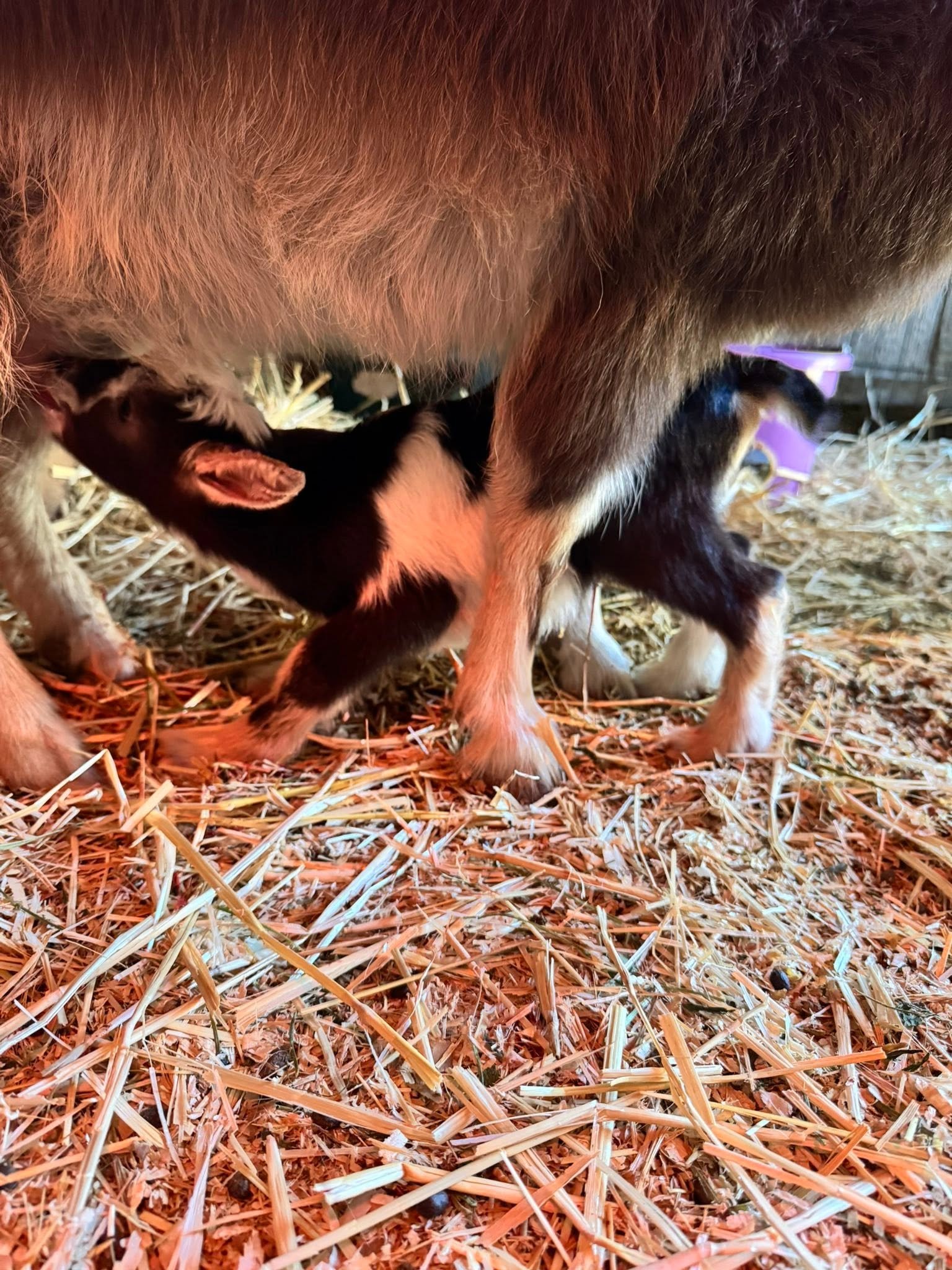
Butter was the first doe to kick off our June kidding season, and she certainly didn't disappoint. On June 4, she delivered quadruplets—two bucklings and two doelings. Her delivery was absolutely textbook. All four kids arrived without complications, and the funniest part was the order in which they were born.
They came out from darkest to lightest.
First came the two boys, followed by the two girls. Every kid was progressively lighter than the one before it. I don't know why I found that so entertaining, but I did. Four kids, perfectly arranged from darkest to lightest, with the boys arriving first and the girls following behind.
The last of those beautiful little doelings was Buttons, who stayed here at Bootsy Garden. Butter also had a gorgeous chocolate buckling, Eddy, who would eventually become one of the boys we offered to another breeding herd, and Stede his brother also left us for a new herd.
After the deliveries, by around 10 p.m., everyone was doing wonderfully. All four babies were eating, Butter was doing great, and everything was exactly how I wanted it to be.
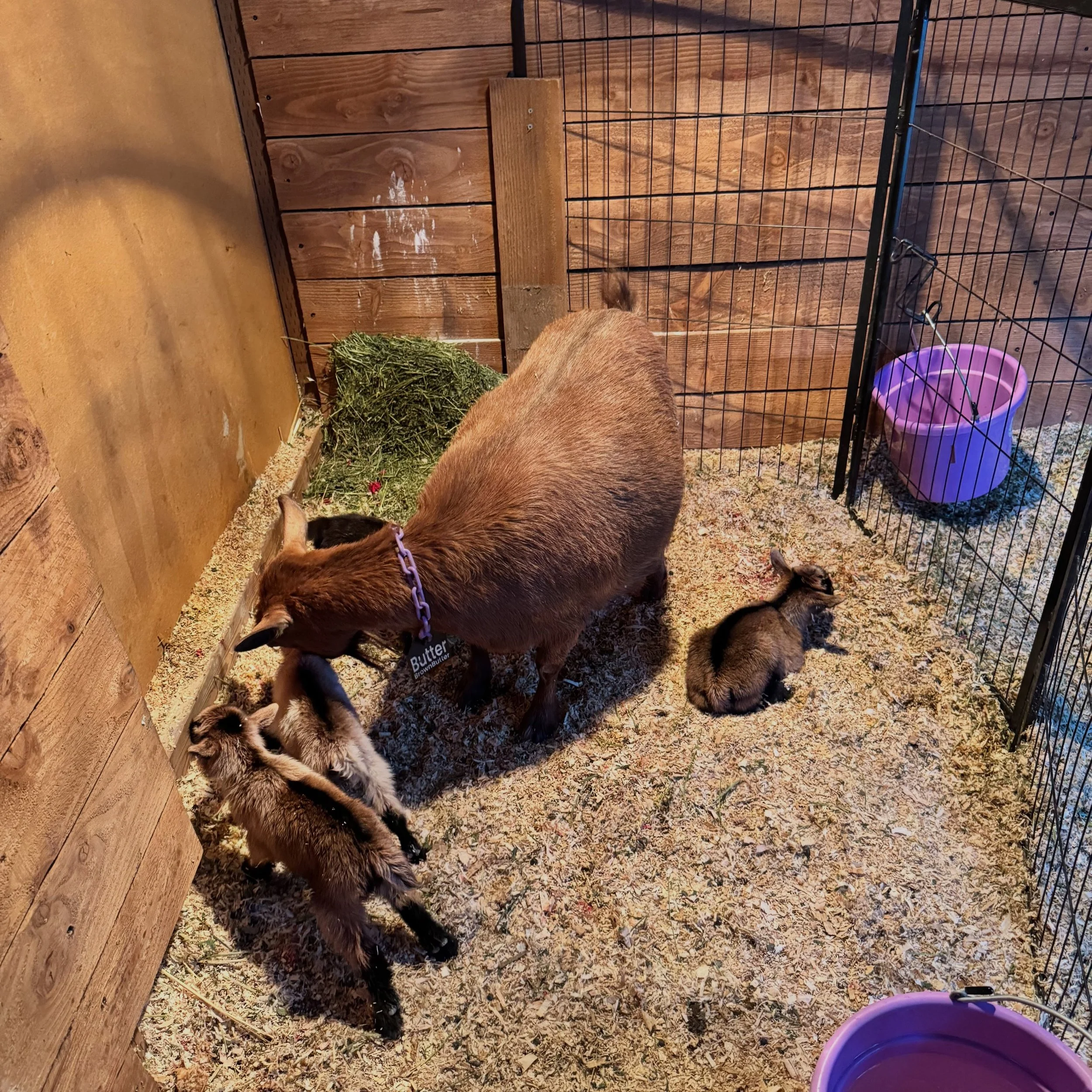
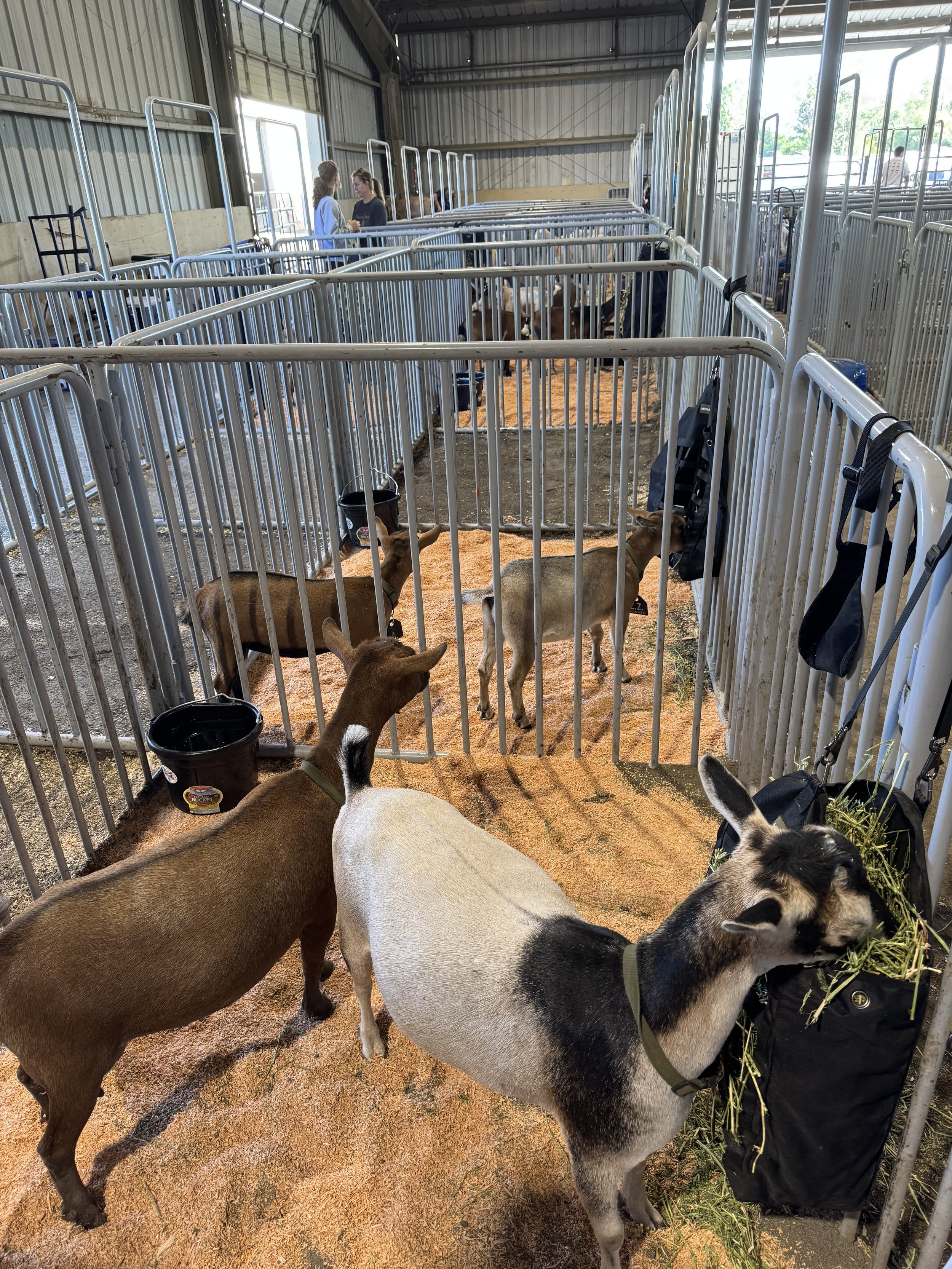
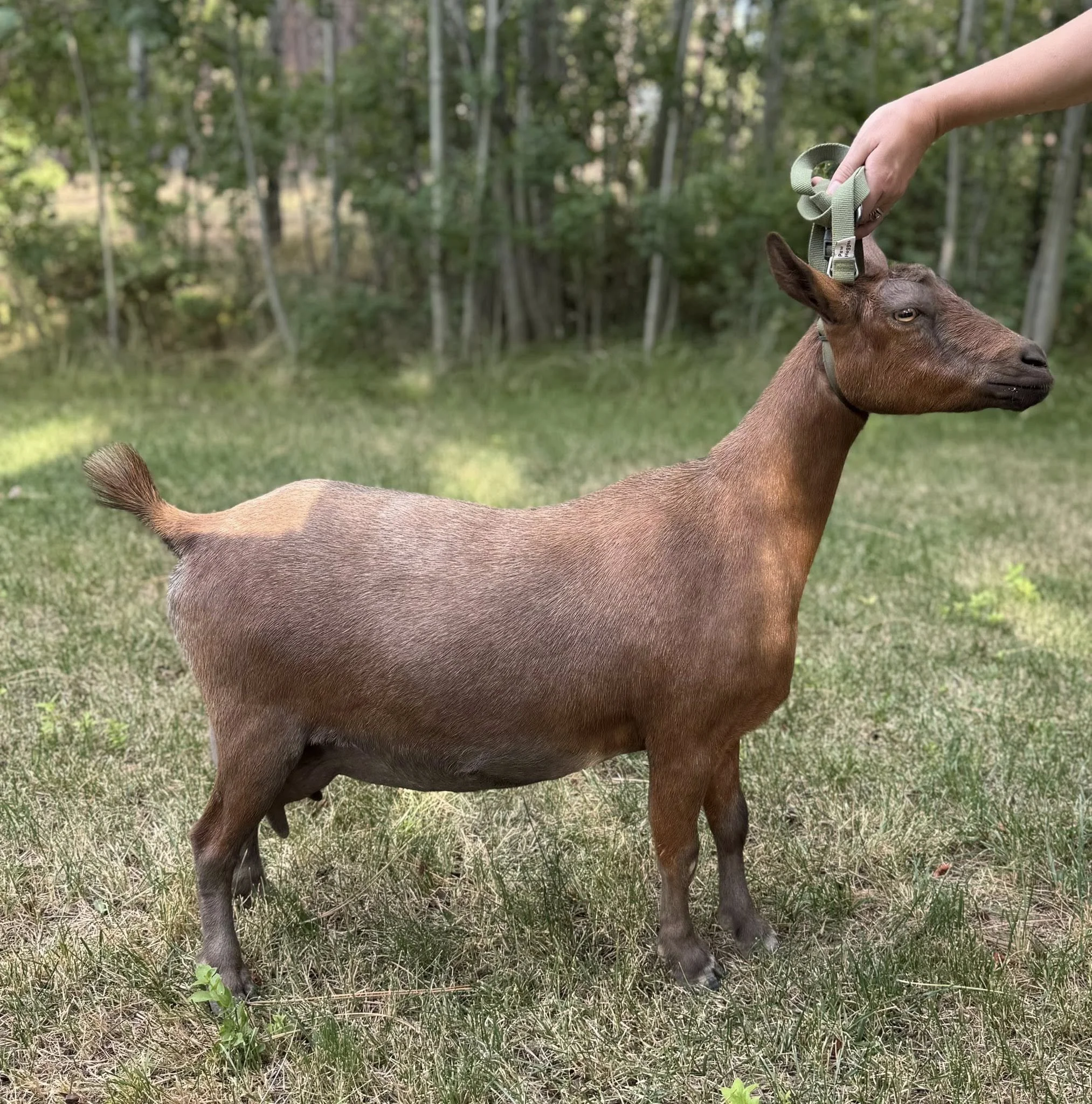
Honestly, Butter made having quadruplets look easy. And if you know Butter, that probably isn't terribly surprising. She is one of those does who has earned a permanent place in my herd. At our 2026 linear appraisal, Butter received a score of VVEE 91, and I am incredibly proud of her.
Between her conformation, production, and the beautiful kids she produces, Butter represents so much of what I want to accomplish with my Nigerian Dwarf breeding program. She isn't going anywhere. Butter will be at Bootsy Garden forever and ever.
Butter's kidding was one of those wonderful experiences where everything simply went right. Four healthy kids, a healthy mama, and a delivery that couldn't have gone much better. I wish every kidding could be that straightforward.
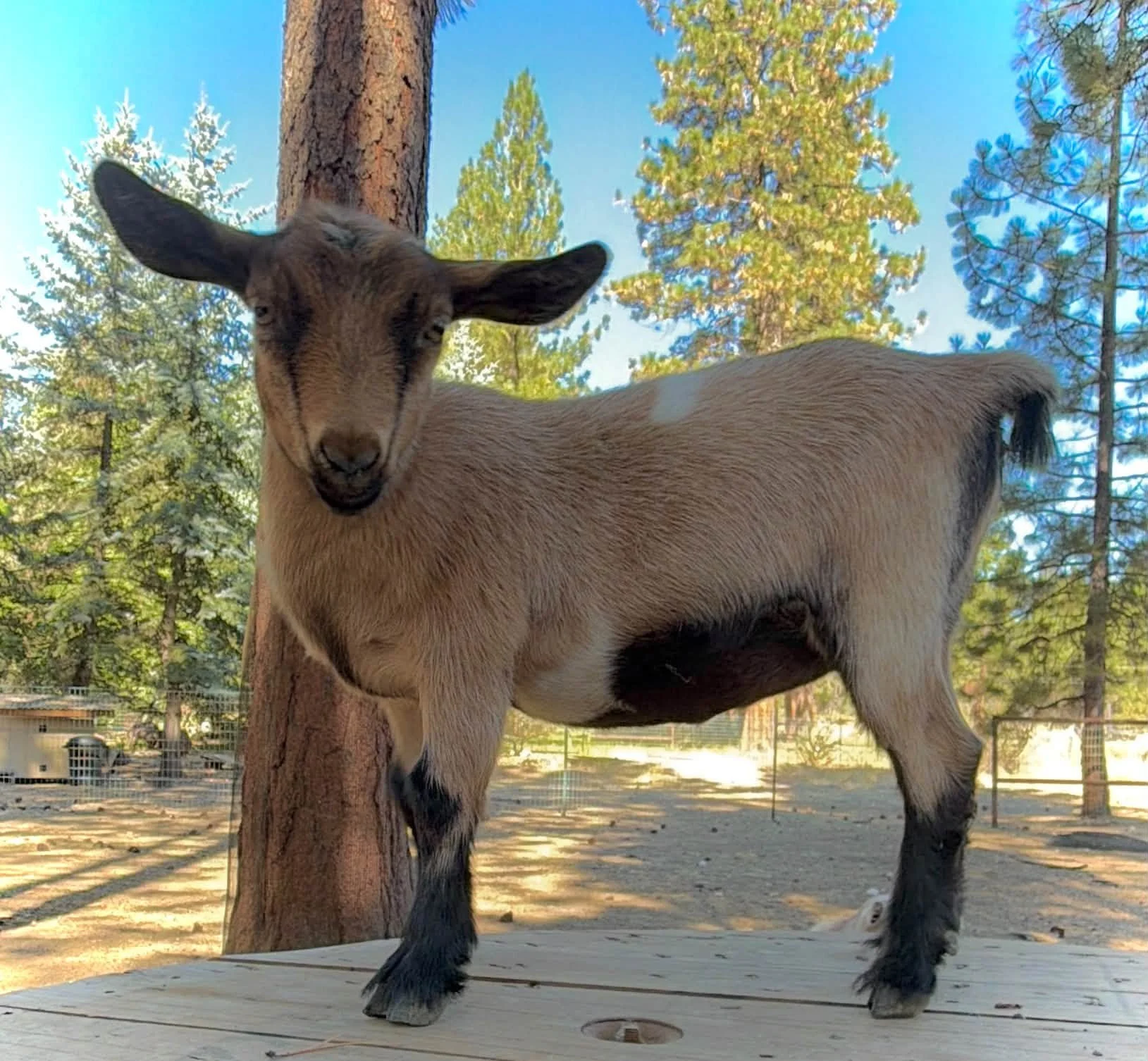
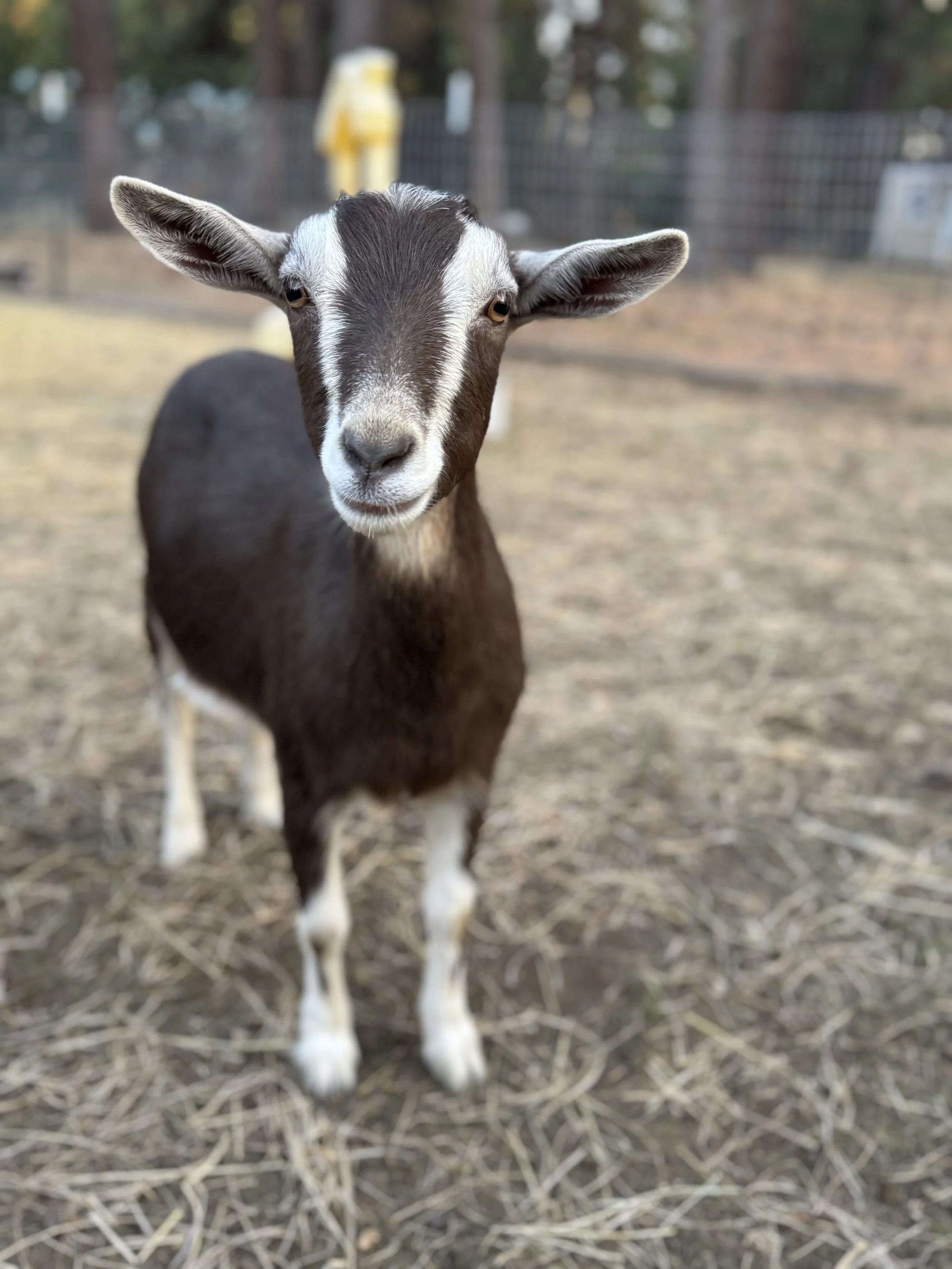
Buttons at 12 weeks old
Annie — June 9, 2026: Three Beautiful Babies and a Heartbreaking Loss
Annie's story is probably one of the hardest parts of our 2026 kidding season to write. She was a first freshener, and her pregnancy had concerned me for quite some time. For approximately the last two months of her pregnancy, Annie had been experiencing some prolapsing. It wasn't horrible, and I had been reassured by others that it could be normal and that she would probably be fine.
But I wasn't convinced.
None of my other pregnant does were experiencing anything similar, and something about it just didn't sit right with me. On the evening of June 8, I noticed that Annie had developed a whitish discharge. Knowing she was getting close, I moved her into a kidding pen and started watching her very carefully.
And when I say carefully, I mean I was checking the barn cameras about every two hours throughout the night.
At approximately 2 a.m., I woke up and checked the cameras.
Nothing. Annie was comfortable, wasn't actively pushing, and didn't appear to be doing much of anything.
So I went back to sleep. The next time I woke up, it was somewhere around 4 a.m., and I had that horrible feeling that I needed to check the cameras immediately.
There was Annie. With three babies.
All three kids were already born, and I could see their little tails wagging on the camera. It was genuinely one of the sweetest things I have ever seen. And I immediately panicked because I had missed the entire delivery!
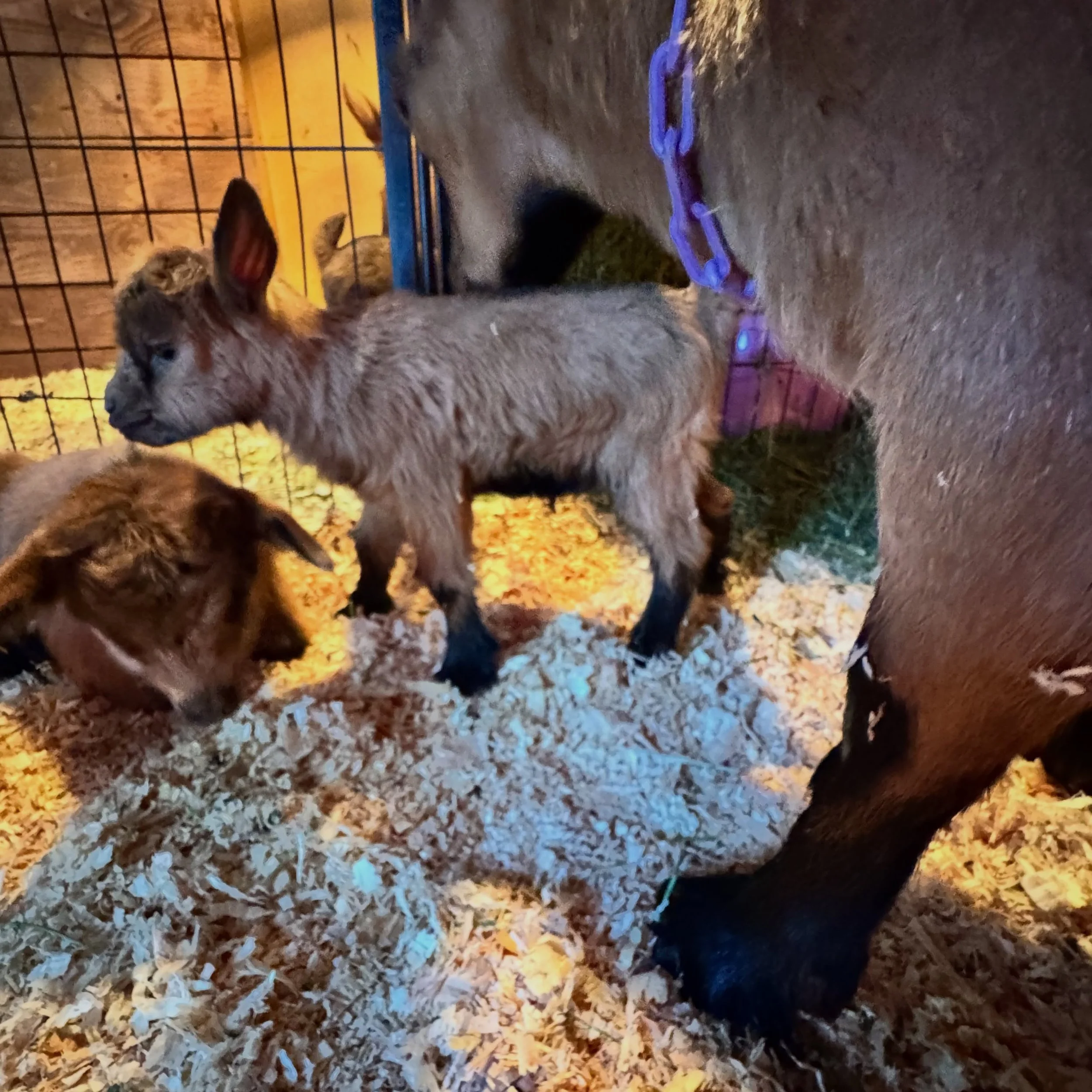
I jumped out of bed and headed straight to the barn. I couldn't have missed their births by more than a few minutes. One of the babies still had some of the birth membranes on it, so they were incredibly fresh. Annie had delivered two doelings and one buckling, completely on her own.
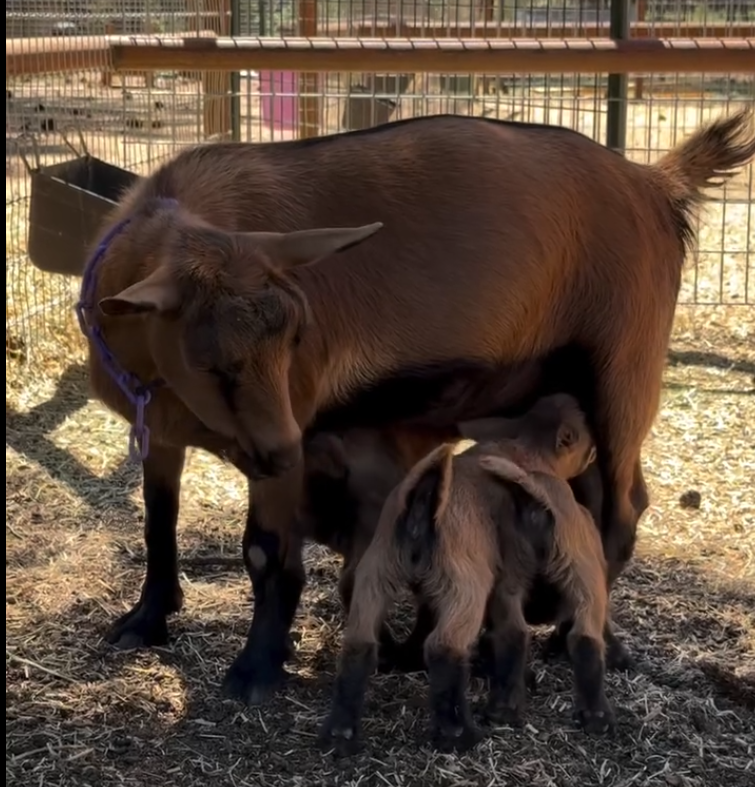
I gathered up the babies, got them cleaned and blow-dried, and then returned them to their mama. And Annie was wonderful. She was such a good mother. She accepted her babies, cared for them, and appeared to be recovering beautifully.
Her udder looked nice, she seemed to be healing well, and I was so relieved that everything had gone smoothly, especially after spending so much of her pregnancy worrying about her.
Unfortunately, that wasn't the end of Annie's story. Approximately two weeks after kidding, Annie passed away.
It was heartbreaking. She had seemed to be recovering well, and looking back, there are things I still wonder about.
One of Annie's doelings, whom we affectionately call Little Annie Baby, was noticeably smaller than her siblings. She was our little runt. Her brother, Mackie Boy, on the other hand, was an absolute eating machine. He grew incredibly quickly and was a big, strong little buckling. Now, looking back on everything, I wonder whether Annie was producing enough milk to support all three kids.
I don't know that she wasn't. And I certainly can't say that milk production had anything to do with her death. But it is something I have thought about a lot since losing her.
Was Little Annie Baby getting enough milk? Was Mackie Boy consuming a disproportionate amount? Was Annie able to keep up with the demands of three rapidly growing kids as a first freshener?
Those are questions I wish I had paid more attention to at the time.
What Annie Taught Me About Raising Triplets
One of my biggest takeaways from Annie's kidding is that I need to be more intentional about evaluating whether a doe is producing enough milk for the number of kids she is raising. It isn't enough to see three babies nursing and assume everyone is getting what they need. Especially with first fresheners, I want to pay closer attention to individual kid growth, body condition, and actual milk production.
That means monitoring weights, watching for differences between siblings, and being willing to supplement when necessary. I can't go back and change what happened with Annie. I also can't say that any of those things would have changed the outcome. But I can learn from the experience.
Where Are Annie's Babies Now?
All three of Annie's kids are doing wonderfully. Mackie Boy was wethered and is now living as a pet with a family. He has a six-year-old who absolutely adores him, and I love knowing that he has such a wonderful home.
Both of Annie's doelings are staying here at Bootsy Garden. Little Annie Baby may be small, but she and her sister are incredibly special to me. They are a little piece of Annie that I get to keep.
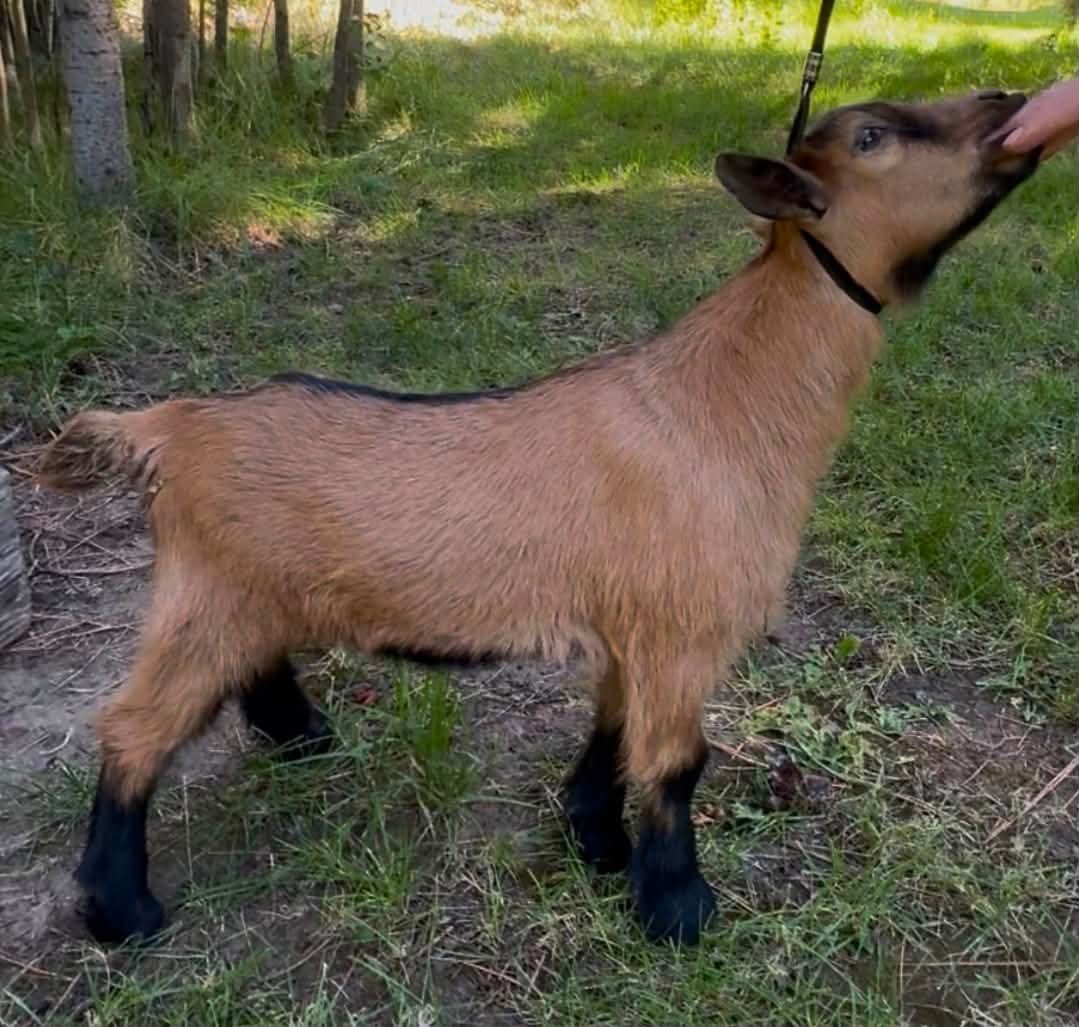
Mackie at 10 weeks old.
And while Annie's story didn't end the way I wanted it to, I am grateful that she gave us three beautiful, healthy kids and that I was able to experience what a wonderful mother she was.
ZZ — June 10, 2026: A Long Labor, a Breech Doeling, and One Very Special Dairy Goat
Next up was ZZ. And if you've ever met ZZ, you already know that she is a character. ZZ is one of my absolute favorite goats. She is also, without question, one of the most neurotic animals I have ever owned.
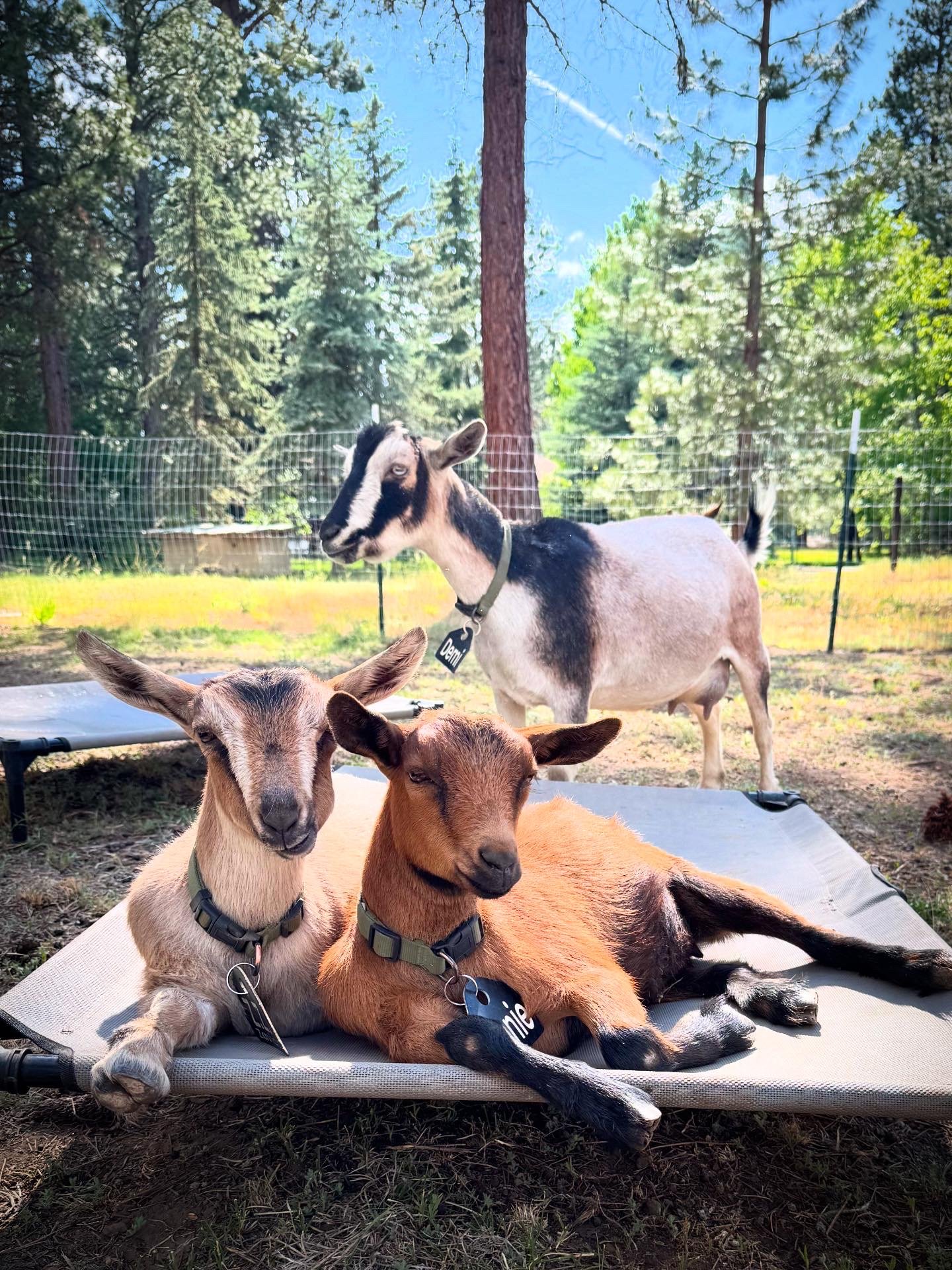
She is obsessed with her mother, Demi. Seriously. Obsessed. ZZ was dam-raised, and she has never been particularly interested in people. She loves her mother, wants to be wherever her mother is, and would probably be perfectly content to spend the rest of her life glued to Demi's side.
But despite her slightly ridiculous personality, ZZ is an exceptional dairy goat. And her kidding was one I won't forget.
Waiting, Watching, and Timing Contractions
ZZ seemed to be in pre-labor forever.
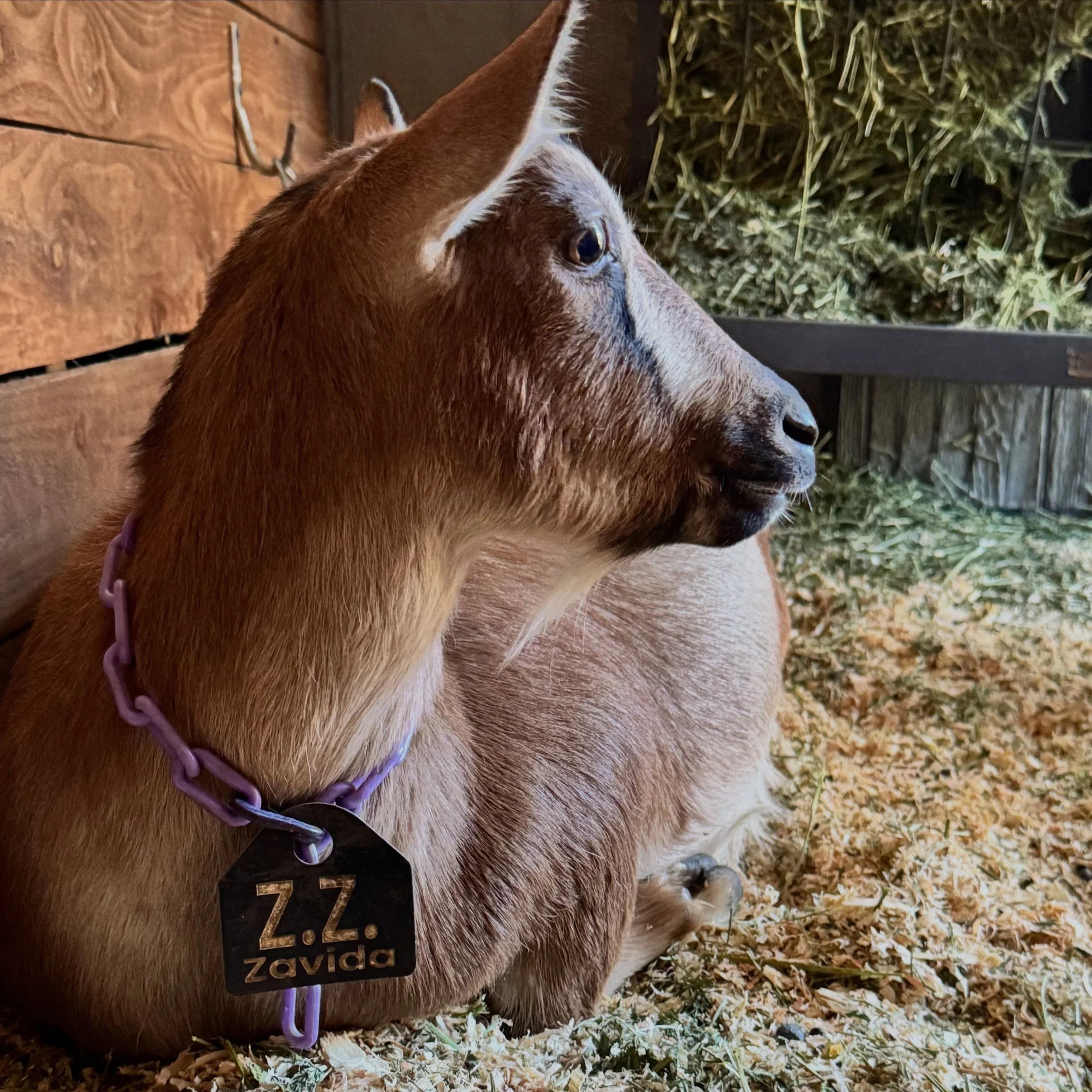
It felt like close to 24 hours of watching her act like she was getting ready to deliver. She would stretch out a leg, reposition herself, and act like she wanted to push without actually getting down to business. Eventually, I moved her into a kidding pen.
That evening, somewhere around 7:30 or 8 p.m., I called my neighbor and asked her to come over. And then we waited.
And waited.
And waited some more.
Eventually, ZZ started actively pushing. Once I could tell that she was truly in active labor, with visible fluid and productive-looking contractions, I started a timer. I am a big believer in giving my does the opportunity to deliver their kids themselves whenever it is safe to do so. I don't want to intervene unnecessarily, but I also know that there comes a point when waiting isn't the right decision.
At around 45 minutes of pushing without a baby being delivered, my timer went off. ZZ was working hard, and I could see that she was making an effort. I wondered whether she might simply have a very large kid. So I decided to give her another 15 minutes while continuing to watch her closely.
My neighbor kept asking whether everything was normal. And my answer was basically, "I don't know!" because at that point, I genuinely wasn't sure what was going on.
Finally, at approximately 11:30 p.m., we saw a bubble. And then we saw a baby. Except the baby wasn't coming out the way I expected.
They were breech.
Instead of seeing a nose and two front hooves, I was looking at the back end of a kid and two enormous little thighs.
It was Nina. Our beautiful, dark buckskin doeling. I was able to carefully get a finger positioned around her back end, near her hip, so I had enough of a hold to gently assist her out. I worked carefully and was able to deliver her completely.
And as soon as Nina was out, everything changed. The next two kids—both bucklings—came out incredibly quickly. After all that waiting and worrying, ZZ went from delivering her first kid at approximately 11:30 p.m. to being completely finished by midnight.
My suspicion is that Nina's breech presentation was what had been holding everything up, and once she was delivered, the boys were ready to make their entrance.
Why I Decided to Bottle-Raise ZZ's Triplets
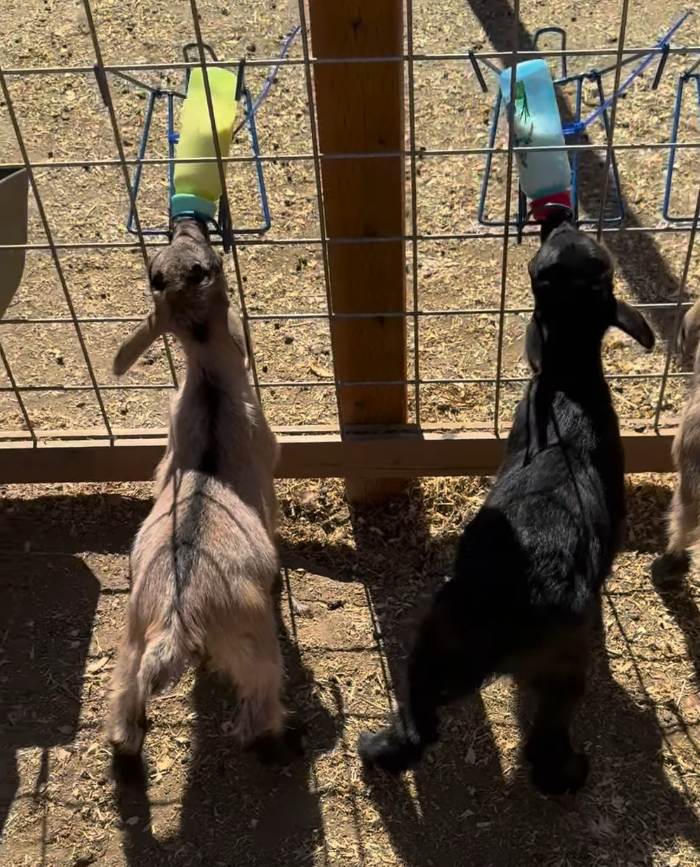
I made the decision to pull all three of ZZ's kids and bottle-raise them. This was a deliberate choice. Because ZZ had been dam-raised and remained so incredibly attached to Demi, I wanted to try something different with her kids. I wanted them to be more comfortable with people and develop stronger relationships with us. So we pulled the kids, got them cleaned and blow-dried, and started them on bottles.
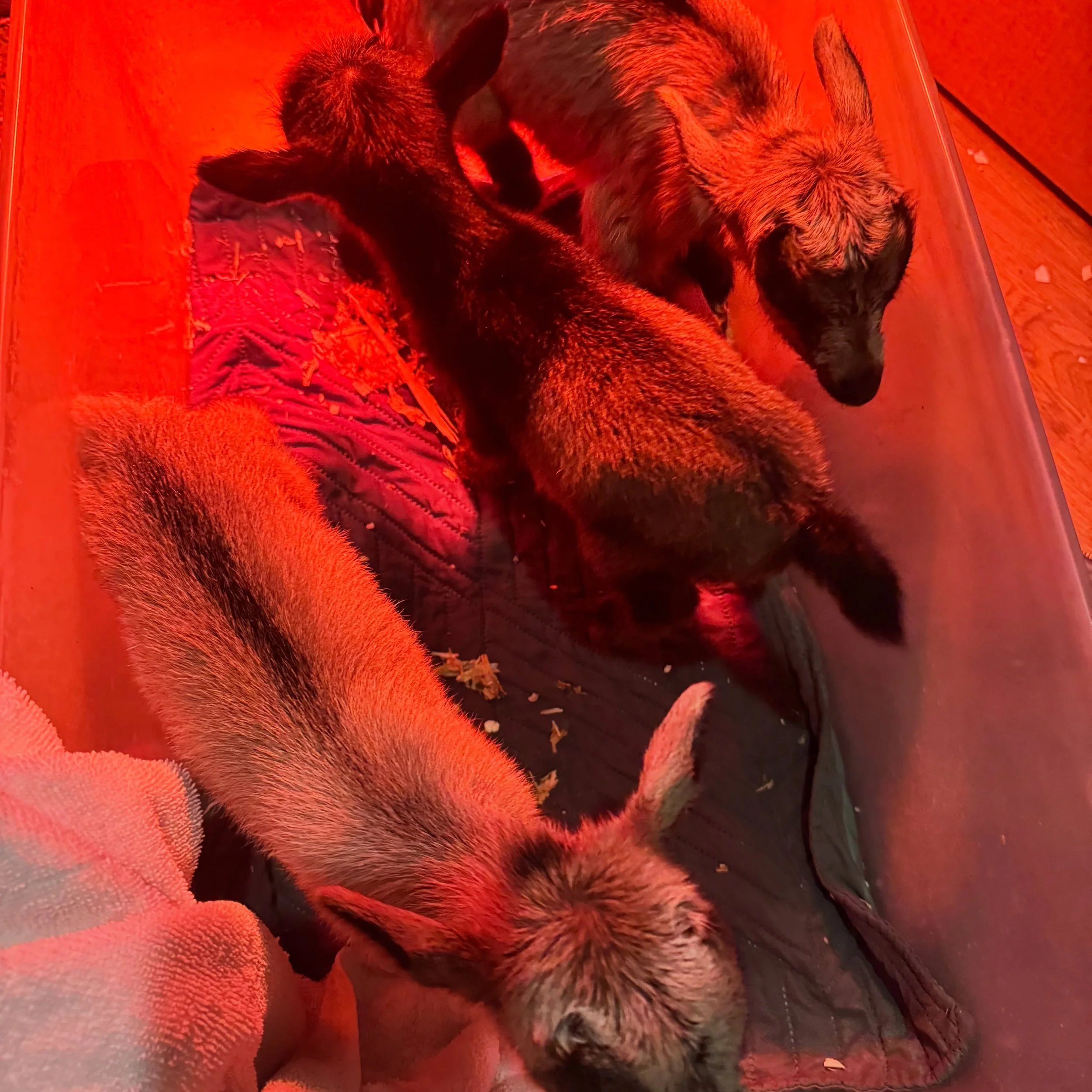
Both boys were eventually wethered and went to a wonderful little homestead, where they are now living their best lives as pets. Nina, of course, stayed here at Bootsy Garden. And I absolutely adore her.
Why ZZ Is One of My Foundation Does
I could probably write an entire article about ZZ. She is stunning. Her coloring is this beautiful silvery buckskin combination that I never quite know how to describe. Her personality is completely ridiculous. And her dairy character is exceptional. During our 2026 linear appraisal, our appraiser identified ZZ as the most dairy doe in our herd. She has an incredibly flat-boned, angled rib structure and the kind of dairy character I love to see in our goats, but perhaps even more impressive is her production. ZZ produces more milk than any other doe in my herd.
She has even outperformed her own mother, Demi, in the production department. For a doe who spends so much of her life worrying about where her mother is, she has certainly managed to establish herself as an exceptional individual. ZZ is a foundation doe for Bootsy Garden. I love everything about her, from her beautiful coloring and dairy structure to her completely neurotic personality. She will be here forever. Even if she never figures out that she can survive more than five feet away from Demi.
Hali — June 11, 2026: One Night of Kidding, a Few Hours of Sleep, and Another Set of Triplets
Hali decided that ZZ shouldn't get all the attention. Remember how ZZ finished kidding around midnight on June 10?
Well, by the time we had delivered all three of ZZ's kids, pulled them, cleaned them, blow-dried them, fed them, and brought them into the house for the night, I was exhausted. I finally went to bed.
And then, at approximately 5 a.m., I was back outside doing morning chores before work. ZZ was doing great and remained in her kidding pen. While I was letting everyone else out and checking on the herd, I noticed something about Hali. She had a small amount of whitish discharge around her vulva.
It wasn't dramatic. Just a little white smear, and Hali wasn't acting like she was in labor. Hali is subtle. She isn't the type of doe who necessarily makes a big production out of things. So I looked at her and thought, "That looks suspicious, lady."
I decided not to take any chances. I moved her into another kidding pen with a camera, made sure she was settled, and headed off to work.
After arriving at work, I checked the barn cameras, and there was Hali. With a baby. Already born. I couldn't believe it. We had literally just finished kidding ZZ the night before, and now Hali had decided it was her turn.
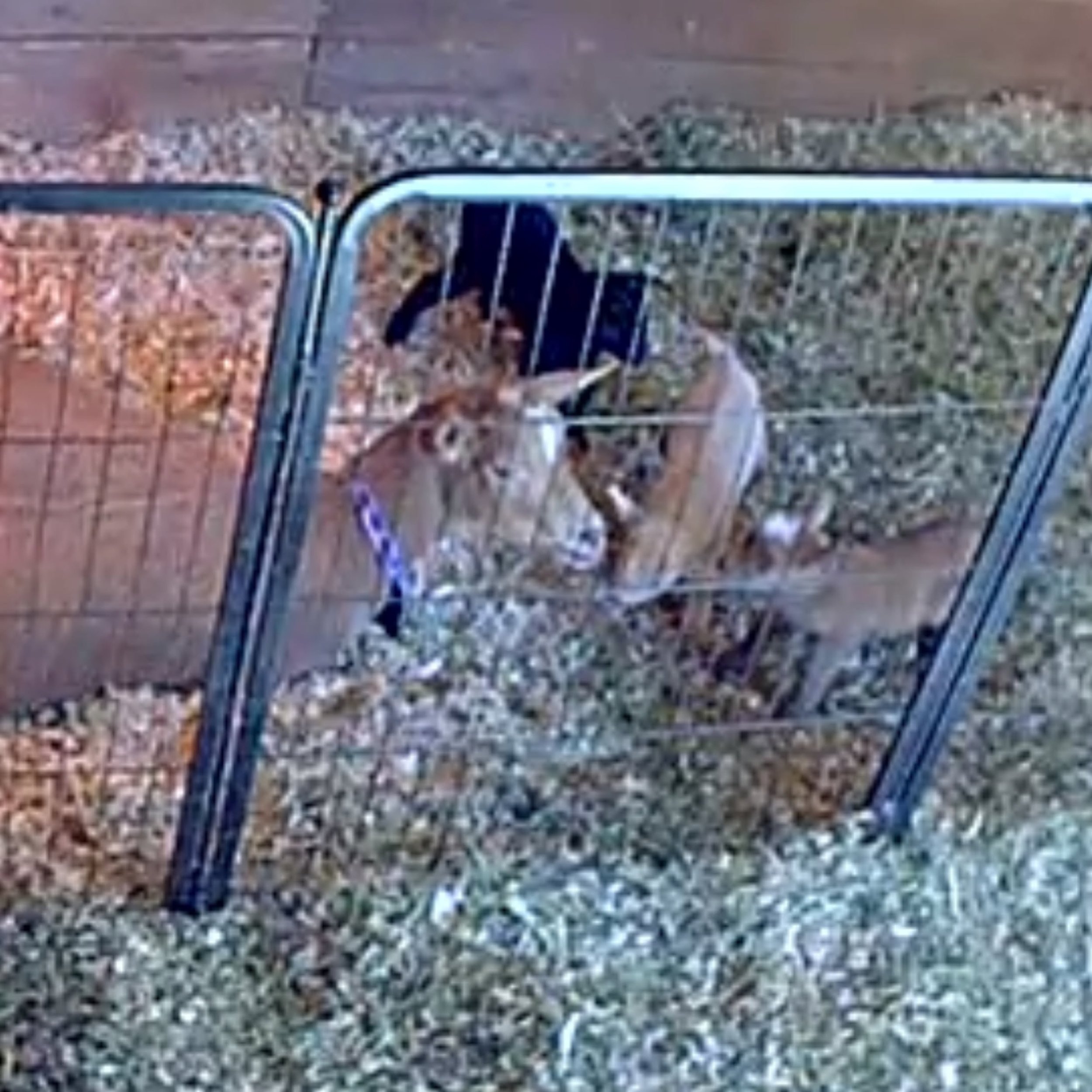
Thankfully, my neighbor was available. Yes, the same neighbor who had stayed with me until midnight for ZZ's delivery. I called her and asked whether she could please run over to the house and make sure Hali and her babies were okay.
I was able to watch the activity on the cameras, including my neighbor arriving and helping with the kids. She took the first baby into the milking parlor, got it cleaned up and blow-dried, and then returned it to Hali.
The babies stayed with their mother until I got home from work. Hali had delivered triplets: two bucklings and one doeling. I already knew exactly which baby I wanted to keep.
When I got home, I went straight out and collected Tillie. Or, as I like to say, I kidnapped her. Tillie was Hali's little doeling, and I wanted to bottle-raise her. She took to the bottle immediately. No drama. No fighting. She just accepted it.
I let Hali keep and raise her two boys. Both bucklings remained intact, and both were still here on the farm when I originally started writing about our kidding season.
One of those boys is Jesus, our gold buckling, whom we decided to retain. The other is a black buckling with a little white on his tail and a white poll, just like his mother. That handsome boy is Lettie, and he is available to a new herd. Lettie is polled, black with that little white splash on the tip of his tail, and comes from Hali’s line. I would love to see him go somewhere that appreciates him.
Hali’s Kidding Was a Reminder to Trust the Little Signs
One of the biggest things Hali reinforced for me is that not every doe is going to make her impending delivery obvious. She wasn't screaming. She wasn't making a huge scene. She wasn't showing me the same prolonged pre-labor behavior that ZZ had displayed. She simply had a little bit of discharge that made me suspicious. That was enough for me to put her in a kidding pen. I'm very glad I did.
It also reminded me how grateful I am for good barn cameras and neighbors who are willing to run over and check on a goat at a moment's notice. Especially after that same neighbor had been up with me until midnight the night before!
Demi — June 16, 2026: Forty-Eight Hours of Screaming and One Six-Pound Buckling
And then there was Demi.
Oh, Demi.
If ZZ is neurotic, Demi is dramatic.
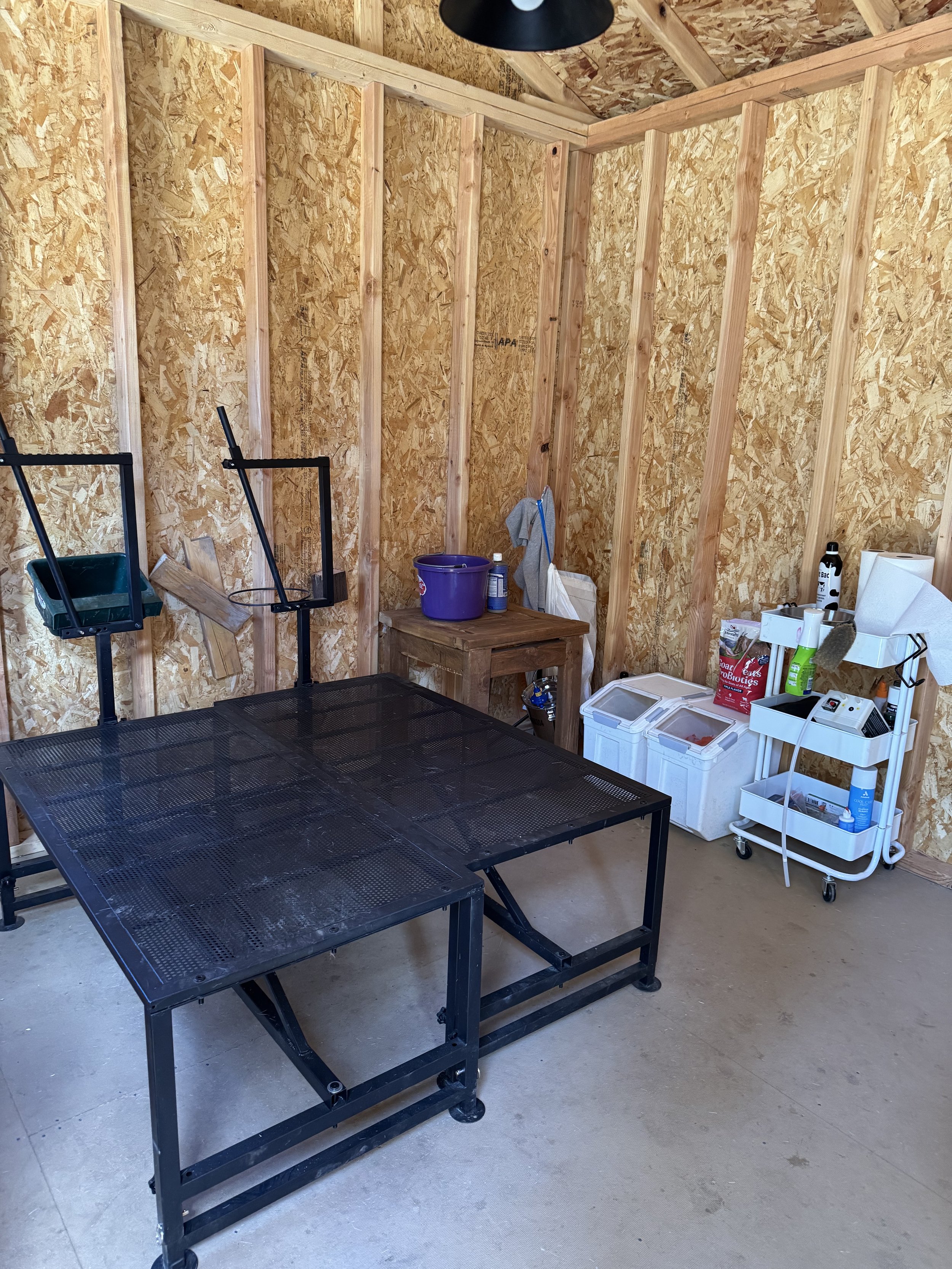
Demi was our last doe due to kid, and by this point, I was ready to be finished with kidding season. Apparently, Demi had other plans. On the morning of June 15, at approximately 6 a.m., I could tell she was starting to show signs of pre-labor. I had also just finished setting up a brand-new little goat barn that I planned to use for kidding pens. I was so excited about it. Everything was ready, and I thought Demi would be the perfect doe to try it out.
So I moved her into the new pen.
And she screamed.
And screamed.
And screamed.
For practically the entire day.
I genuinely couldn't figure out what her problem was. Was she upset because she was in a new environment? Was she uncomfortable? Was she in pain? Was she just being Demi? I had absolutely no idea.
Eventually, I decided that perhaps the new pen was the problem. So I rearranged the goats, moved another doe and her babies out of one of our original kidding pens, and put Demi in there instead. That didn't solve anything.
She continued screaming.
I watched her throughout the day and into the night, checking the barn cameras approximately every two hours. Still no babies. Still no real pushing. Just Demi being extremely vocal about absolutely everything.
The Morning of June 16
The following morning, I was back out in the barn around 5 a.m. to feed everyone and get ready for work. Demi was still pregnant. And still screaming, and she was also eating her breakfast completely normally. She would scream into her feed bowl, take another bite, and then scream at whoever happened to be standing nearby.
Honestly, that's pretty typical Demi behavior, so at that point I was having a hard time deciding whether she was actually uncomfortable or simply being herself. I had moved her into the older kidding area, where ZZ had delivered.
Since ZZ is so attached to Demi, I even let ZZ spend some time in the pen with her. Then Demi finally started doing something.
She sort of crawled onto her side. I don't know how else to describe it, but she reminded me of a hippopotamus. She rolled onto her side, stretched all four legs straight out, and started screaming like she was dying.
And then I saw it.
A baby's head.
A massive baby's head.
Meet Hank: Six Pounds of Solid Black Buckling
Demi was delivering a singleton. And not a small one. Hank was a six-pound, solid black Nigerian Dwarf buckling. He was enormous. No wonder Demi had been so uncomfortable. Despite his size and all the drama leading up to the birth, his presentation was completely normal. He was coming nose and front feet first, exactly the way you want a kid positioned. Demi worked hard to get him out.
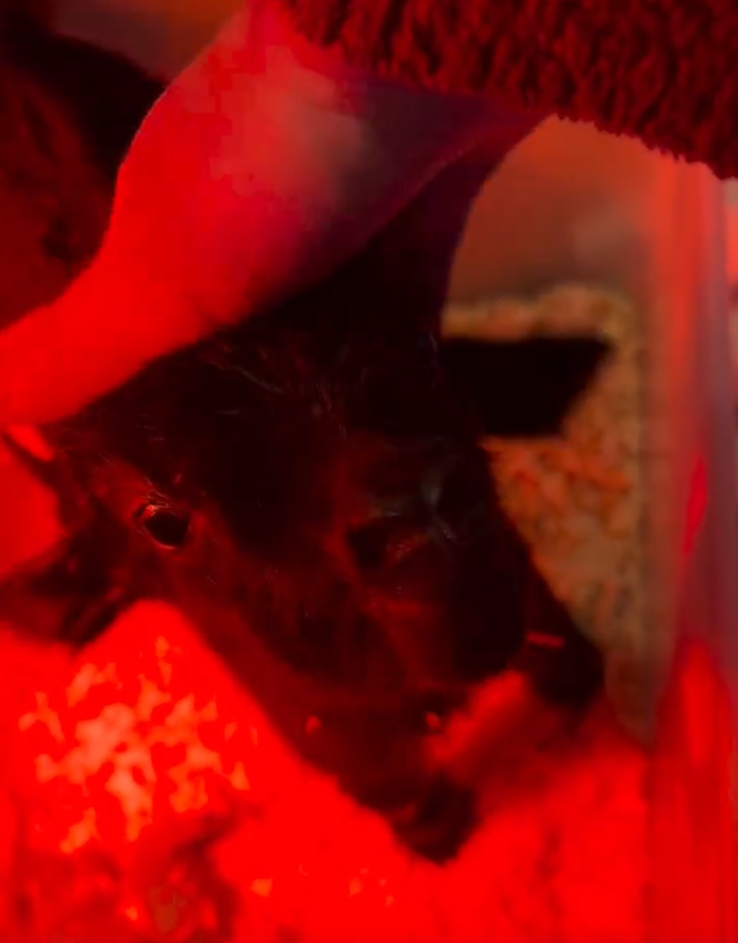
Once his head and front hooves were delivered, I was able to gently assist her, pulling with a contraction until Hank was completely born. And that was it. One giant buckling. No other babies.
After all that screaming, all the pen changes, all the camera checks, and all the worrying, Demi had delivered a single six-pound boy. I pulled Hank and started him on a bottle. And with his arrival on June 16, our live kidding season was officially over.
Looking Back on Our 2026 Nigerian Dwarf Kidding Season
When I think about this kidding season, I don't just think about the 15 live kids we welcomed. I think about how completely different every doe's experience was.
Butter delivered four kids in a beautiful, uncomplicated kidding, with her babies arriving from darkest to lightest.
Annie quietly delivered triplets while I was sleeping, and I woke up to three tiny tails wagging on the barn camera. Then, just weeks later, we lost her.
ZZ kept us waiting for hours before delivering Nina breech, followed by two boys who seemed to be in a hurry to make up for lost time.
Hali gave me one tiny clue that she was getting ready to kid, and then delivered while I was at work, just hours after we had finished with ZZ.
Demi spent nearly two days screaming at everyone and everything before producing one enormous six-pound buckling.
What This Season Taught Me
I have been raising Nigerian Dwarf dairy goats long enough to know that no two kiddings are exactly alike, but this season reinforced a few things that I want to carry into future years.
First, I want to be even more attentive to milk production and individual kid growth, especially with first fresheners raising multiples. Annie's experience left me with questions I may never be able to answer, but it also gave me something concrete to improve in my management.
Second, I want to continue learning when to wait and when to intervene during delivery.
ZZ's breech delivery was a reminder that even when a doe is working hard, the presentation of the kid can change everything. I want to give my does the opportunity to deliver naturally, but I also want to recognize when a difficult birth requires assistance or veterinary attention.
Third, I am more convinced than ever that knowing each doe individually is one of the most valuable tools a breeder can have.
Hali’s quiet signs of labor looked nothing like Demi's dramatic performance. ZZ's behavior was different from Butter's. And sometimes the only reason I know something is happening is because a doe just doesn't seem quite like herself.
Finally, I am grateful for the people who helped us through this season.
For my neighbor, who sat with me through ZZ's long labor and then came running back the next morning when Hali decided to kid while I was at work. For the extra hands who helped dry, feed, and care for babies.
The Kids We're Keeping and the Future of Bootsy Garden
One of the most exciting parts of kidding season is deciding which kids will stay and become part of the future of our herd.
This year, we retained several beautiful doelings, including Birdie, Buttons, Nina, and Annie's two daughters, Lil Annie and Marina.
We also retained Jesus, Hali’s gold polled buckling.
These kids represent the next generation of our breeding program, and I'm excited to see how they mature.
Our goal at Bootsy Garden has always been to breed Nigerian Dwarf dairy goats that combine beautiful, functional conformation with strong milk production and the qualities that make them enjoyable to live and work with.
Butter and ZZ, in particular, continue to show me what I want the future of this herd to look like.
And while we love keeping the best prospects for our own program, we also have some wonderful bucks who deserve opportunities in other herds.
If you're looking for a Nigerian Dwarf buck for your own breeding program, we'd love to talk about your goals and whether one of our boys might be a good fit.
Here's to the Next Kidding Season
By the end of June, I was happily exhausted. There had been late nights, early mornings, bottles everywhere, barn cameras constantly open on my phone, and a whole lot of time spent staring at goat vulvas. There were moments when I was incredibly proud of my does. There were moments when I was worried. There were moments when I genuinely had no idea what was going to happen next, but that's part of raising dairy goats.
Every kidding season adds to your experience. Every doe teaches you something different. And sometimes the hardest lessons are the ones that stay with you the longest.
Our 2026 season gave us 15 beautiful live kids, seven girls and eight boys, along with memories I won't soon forget.
Now we're looking ahead to our next group of fresheners, our retained doelings, and another year of working toward the herd we've been building here at Bootsy Garden.
And yes, I'm already excited to do it all over again.